Resident
Dorothea Mackellar
The poet of "My Country", at Cintra on Darling Point.
Dorothea Mackellar — the author of My Country, the poem every Australian schoolchild still learns — lived on the Darling Point peninsula for the last thirty-five years of her life. Her association with the place is one of several quiet residencies that give the postcode its cultural weight, even though the public record of it is now thin.
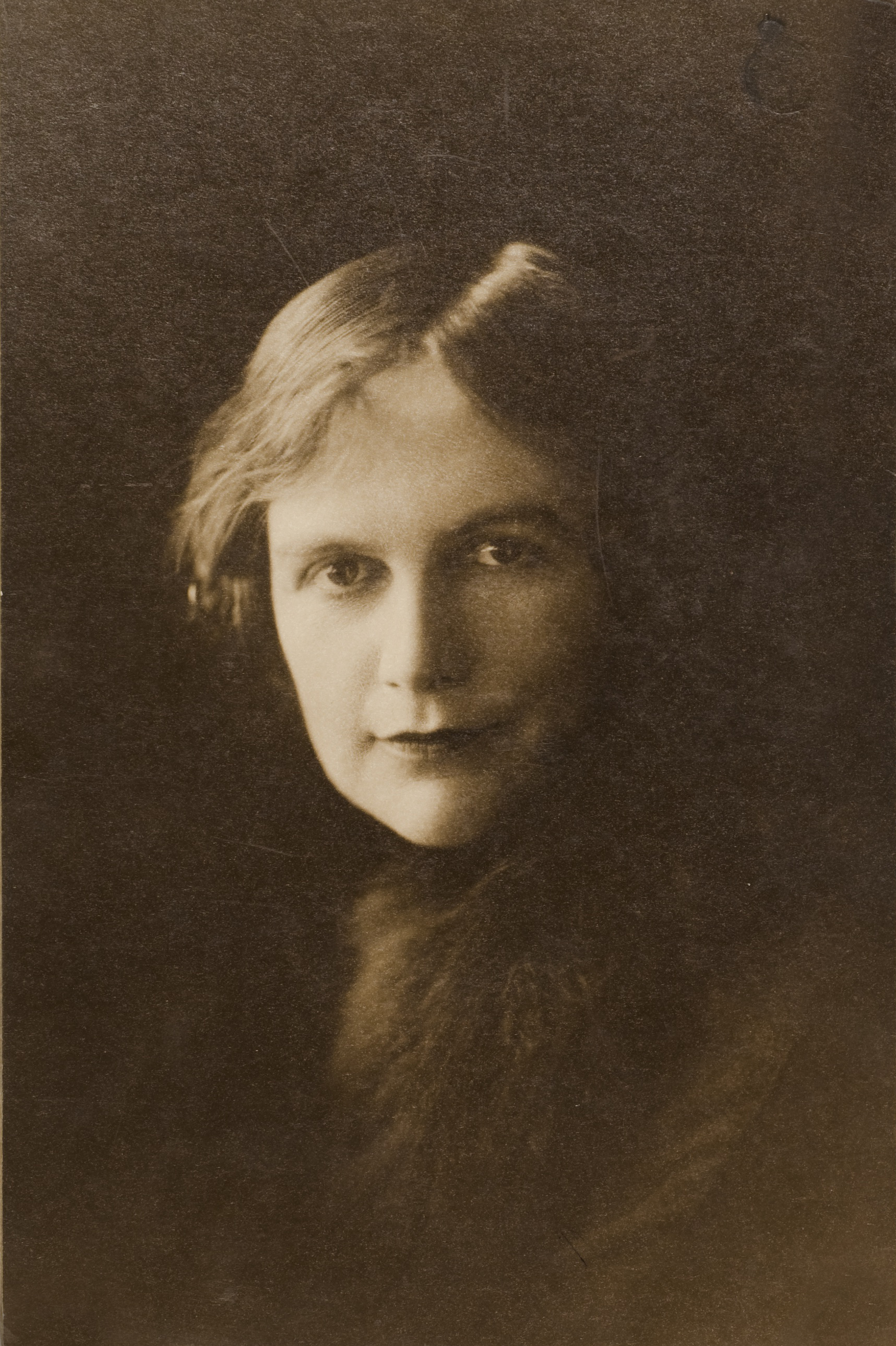
Isobel Marion Dorothea Mackellar was born in 1885 into one of Sydney's established professional families. Her father, Sir Charles Kinnaird Mackellar, was a physician, a member of the Legislative Council of New South Wales, and for many years one of the city's more influential public figures. Dorothea grew up between the family's Sydney residences and their pastoral holdings in the Hunter Valley and New England, and was educated largely at home — unusually for a woman of her period she read widely in French, German, Spanish and Italian, and travelled in Europe from an early age.
The poem that made her reputation was written when she was nineteen and published, as Core of My Heart, in 1908. Retitled My Country in later editions, it became the most widely memorised poem in Australian English. Its opening lines — "The love of field and coppice, / Of green and shaded lanes…" — set up the turn to the famous second stanza that begins "I love a sunburnt country". Mackellar went on to publish four books of poetry and two novels, but was from the outset eclipsed by that one early work.
At Cintra, 1930s–1968
In the early 1930s Mackellar moved to Cintra, a Darling Point residence set within mature grounds, and lived there for the remaining three-and-a-half decades of her life. By that point she had effectively withdrawn from public literary activity; her health was uneven, and her later years were lived in considerable privacy. The Darling Point house was chosen precisely for that — harbour views, a walled garden, and the quietness of a peninsula whose residents then, as now, preferred not to be visited unexpectedly.
She is recorded as a resident of the suburb in the municipal rolls of the period, and by older residents who remember her carriage drives along the peninsula in the 1950s and 60s. For the peninsula itself, her presence was characteristic: a significant national figure, living on Darling Point for decades, without the fact of her being there ever becoming a feature of the public place. The address was not a shrine in her lifetime, and has not become one since.
Death and legacy
Dorothea Mackellar was appointed an Officer of the Order of the British Empire in the Queen's Birthday Honours of 1968, for her services to literature, three months before her death at the age of eighty-two. She died at Paddington, a short distance from her Darling Point home. She was buried in Waverley Cemetery, the nineteenth-century cliff-top cemetery on the Sydney coast that also holds Henry Lawson and many of her literary contemporaries.
Her most enduring memorial is the Dorothea Mackellar Memorial Society Poetry Awards, founded in her name in 1984 and now one of the largest school poetry competitions in Australia. For the peninsula, her legacy is quieter: she is one of a sequence of cultural figures whose long residence on Darling Point has left very little outward trace, but who together explain why the address has the reputation it does.